The Evolution of Welding Equipment and Its Effect on the Industry
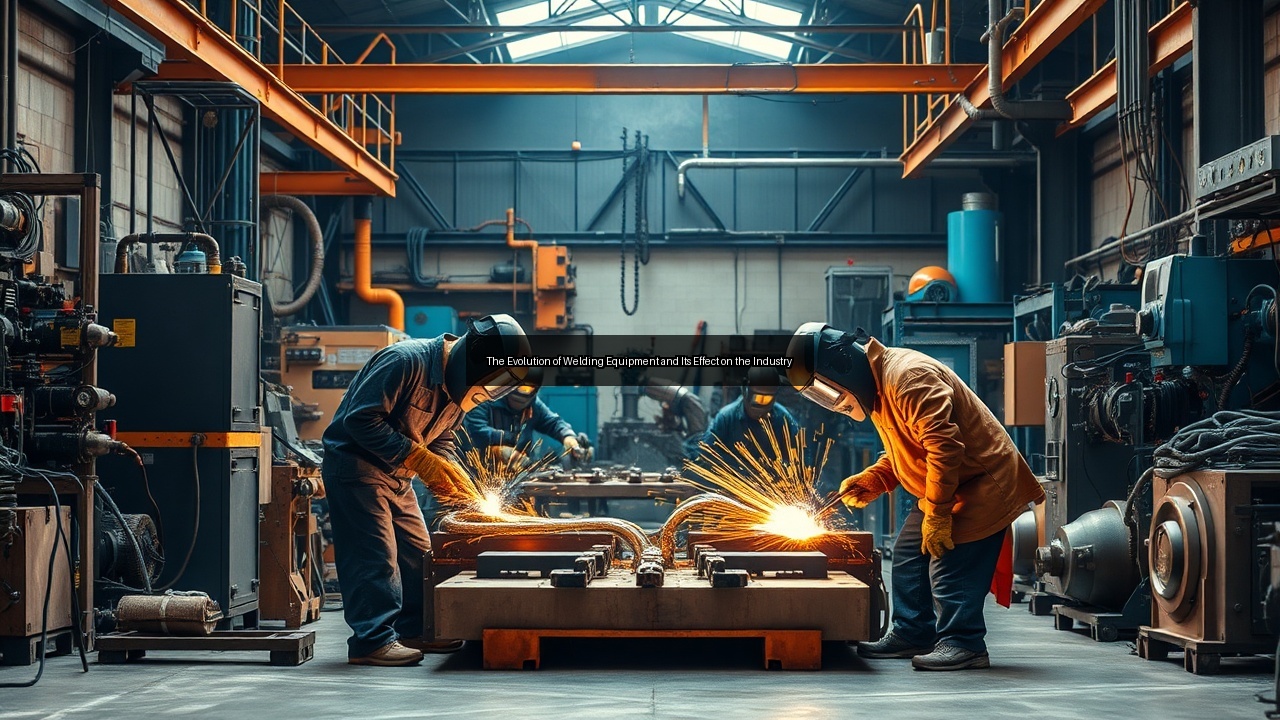
Historical Overview of Welding Technologies
The Dawn of Welding: Early Techniques and Tools
Welding traces its roots back to ancient civilizations, where artisans employed rudimentary techniques to fuse metals. Early welding involved forging, where blacksmiths heated metal pieces until they glowed, then hammered them together to create a solid fabrication company bond. Tools like hammers and anvils were essential in these processes. This manual, labor-intensive method, while effective, had limitations in terms of precision and scalability. Over time, the need for stronger and more reliable joints in various industries, especially in construction and manufacturing, led to the exploration of more sophisticated techniques.
The Rise of Arc Welding: SMAW and Its Impact
The 19th century marked a pivotal shift with the introduction of arc welding, particularly Shielded Metal Arc Welding (SMAW). This technique employs an electric arc to melt the base metal and the electrode together, creating a strong weld. SMAW revolutionized metal fabrication by enabling welders to work in various environments, including outdoors and in challenging conditions. The portability of the equipment allowed for onsite welding, significantly impacting infrastructure development and heavy manufacturing. The durability of the resulting joints made SMAW a preferred choice in industries ranging from construction to aerospace.
Advancements in MIG and TIG Welding Processes
The evolution of welding technology continued with the development of Metal Inert Gas (MIG) and Tungsten Inert Gas (TIG) welding processes. MIG welding, known for its speed and versatility, utilizes a continuously fed wire electrode and an inert gas to shield the weld pool from contamination. This process became immensely popular in automotive manufacturing and other high-volume applications. Conversely, TIG welding offers precision for thin materials and intricate designs, making it ideal for industries that require high-quality welds, such as aerospace and medical device manufacturing. Together, these advancements in welding technology have transformed the landscape of metal fabrication, enhancing both efficiency and quality.
Modern Welding Equipment and Their Applications
The Role of Automation in Welding and Fabrication
Automation has become a game-changer in the welding and fabrication industry. Automated welding systems reduce labor costs while increasing precision and repeatability. Robots equipped with advanced welding machines can perform tasks that require high accuracy, such as in automotive assembly lines and large-scale manufacturing facilities. These machines enhance workflow efficiency, allowing companies to achieve higher production rates without compromising on quality. The integration of automation also paves the way for real-time data collection and analysis, enabling manufacturers to optimize their processes and improve overall operational efficiency.
Exploring Advanced Welding Machines and Technologies
Modern welding machines incorporate cutting-edge technologies that improve ease of use and functionality. Innovations such as inverter technology have made machines lighter and more portable, while advanced control systems enhance the quality of the welds produced. Many contemporary machines support multiple welding processes, including MIG, TIG, and Gas Metal Arc Welding (GMAW), allowing welders to adapt to various materials and project requirements. Additionally, features like dual-voltage capabilities and automatic settings provide greater flexibility, making these machines invaluable tools for both custom welding and fabrication tasks.
Quality Control in Welding: Ensuring Structural Integrity
Quality control remains a cornerstone of welding and fabrication processes. Ensuring the structural integrity of welds is crucial, particularly in sectors like aerospace, where failure can have catastrophic consequences. Inspection methods, such as ultrasonic testing and radiographic analysis, help detect flaws that may compromise a weld's strength. Compliance with ISO 9001 standards ensures that manufacturers maintain rigorous quality management systems, improving reliability and customer satisfaction. By investing in quality control measures, companies not only protect their assets but also enhance their reputation in the competitive metal fabrication and welding marketplace.
Materials and Their Influence on Welding Practices
Understanding Metal Alloys and Their Welding Properties
Choosing the right materials is vital in welding and fabrication. Different metal alloys exhibit unique properties that influence their welding behavior. For instance, stainless steel requires different techniques compared to carbon steel due to its higher thermal conductivity and lower melting point. Understanding the characteristics of metals such as aluminum, titanium, and various alloys informs welders on the best practices for achieving strong, lasting joints. This knowledge helps prevent issues like warping and cracking, ensuring that the final product meets the stringent quality requirements of various industries.
The Importance of Sustainability in Metal Fabrication
Sustainability plays an increasingly important fabrication company role in metal fabrication processes. As industries strive to reduce their carbon footprint, welding and fabrication companies are adopting eco-friendly practices. This includes using recyclable materials, optimizing energy consumption, and minimizing waste during the fabrication process. Employing technologies that promote sustainability not only adheres to regulatory requirements but also appeals to a growing market segment that values environmental responsibility. Companies that prioritize sustainable practices position themselves favorably in an industry where consumer awareness and preference for green solutions continue to rise.
Comparative Analysis of Metals: Aluminum vs. Steel
Aluminum and steel represent two of the most commonly used metals in welding and fabrication. Each metal offers distinct advantages and disadvantages. Aluminum is lightweight, corrosion-resistant, and easy to weld, making it ideal for applications in the aerospace and automotive sectors. However, its lower strength compared to steel limits its use in heavy-duty applications. On the other hand, steel provides superior strength and durability, making it a preferred choice for structural applications. Understanding the differences between these metals helps fabricators choose the right material for their projects and ensures the final product meets performance expectations.
The Future of Welding: Trends and Innovations
Emerging Technologies in Welding and Fabrication
The future of welding and fabrication is bright, with emerging technologies set to redefine the landscape. Additive manufacturing, or 3D printing, is gaining traction in the welding industry, allowing for the creation of complex geometries that traditional methods cannot achieve. Techniques such as laser welding are also on the rise, offering precision and speed for various applications. These innovations not only streamline the fabrication process but also reduce material waste, aligning with sustainability goals. As research and development continue to advance, the welding industry will likely see further enhancements in efficiency, capability, and application.
The Shift Toward Automated Welding Processes
The shift toward automated welding processes is rapidly transforming the industry. Automation enhances precision and minimizes human error, leading to consistently high-quality welds. As technology advances, automated systems become more user-friendly and affordable, enabling smaller fabrication companies to invest in these tools. Furthermore, the integration of artificial intelligence in welding machines allows for real-time adjustments based on environmental variables, ensuring optimal performance. This trend toward automation not only increases productivity but also attracts a new generation of skilled workers interested in operating and maintaining advanced welding technology.
Impact of Engineering Design on Manufacturing Efficiency
Engineering design plays a critical role in the efficiency of welding and fabrication processes. Effective design minimizes waste, reduces fabrication time, and enhances the overall workflow. Engineers must consider welding techniques and the properties of materials early in the design phase to ensure compatibility and ease of assembly. Collaborating with welders during the design process allows for practical insights that can lead to innovative solutions. As manufacturers embrace a more integrated approach to design and fabrication, they achieve greater efficiency and higher quality in their products, reinforcing their competitive edge in the marketplace.