Exploring the Benefits of Dehumidified Air for Swimming Pool Longevity
Understanding the Importance of Dehumidification in Swimming Pools
The Role of ASHRAE Standards in Humidity Control
ASHRAE standards set the benchmark for humidity control in indoor pools, ensuring safe and comfortable environments in natatoriums. These guidelines from the American Society of Heating, Refrigerating and Air-Conditioning Engineers dictate optimal relative humidity levels between 50% and 60% to prevent mold growth and structural damage. Facility managers at places like the YMCA rely on these standards to select swimming pool dehumidifiers that maintain air quality. ASHRAE emphasizes precise dehumidification to balance evaporation from the water surface with room ventilation. Without adherence, indoor pools face excessive moisture buildup, leading to slippery decks and health risks. Experts recommend integrating ASHRAE-compliant systems during initial design phases for new constructions. This approach not only complies with regulations but also enhances user experience by keeping the air dehumidified and fresh. Information from ASHRAE reports highlights how proper humidity control extends equipment life and reduces maintenance costs. Pool operators who follow these standards report fewer issues with corrosion on heaters and water filters. In commercial settings, ASHRAE's influence ensures that dehumidifiers for swimming pools perform efficiently, addressing pool moisture control effectively. By prioritizing these standards, owners safeguard their investments against the relentless humidity challenges in enclosed swimming environments.
How Relative Humidity Affects Indoor Pools
Relative humidity directly influences the atmosphere in indoor pools, dictating comfort and operational efficiency. High levels above 60% cause condensation on walls and ceilings, fostering bacteria and allergens that irritate swimmers' eyes and skin. In natatoriums, unchecked relative humidity accelerates evaporation, straining HVAC systems and increasing energy costs. Swimming pool dehumidifiers combat this by removing excess moisture, stabilizing the room's climate control. Experts note that ideal relative humidity keeps the air dehumidified, preventing fogged windows and musty odors. For indoor swimming pools, maintaining this balance proves crucial during peak usage times when body heat and splashing amplify moisture. ASHRAE guidelines underscore how relative humidity impacts air circulation, recommending CFM adjustments to match pool size and occupancy. Without proper dehumidification, indoor pools suffer from reduced visibility and slippery surfaces, posing safety hazards. Pool dehumidifiers tailored for these spaces integrate sensors to monitor and adjust relative humidity in real-time. This technology ensures consistent performance, protecting both users and infrastructure. Operators of commercial swimming pool dehumidifiers often cite relative humidity as the key metric for troubleshooting imbalances. By focusing on this factor, facilities achieve better humidity control, enhancing overall enjoyment and longevity of the swimming pool environment.
Impact of Humidity on Swimming Pool Longevity
Excess humidity shortens the lifespan of swimming pools by promoting corrosion and material degradation in indoor settings. Water vapor attacks metal components like ladders and heaters, leading to rust and frequent replacements. In natatoriums, high humidity erodes cement structures, causing cracks and leaks over time. Swimming pool dehumidifiers mitigate these risks by maintaining dehumidified air, preserving the integrity of the pool room. Experts warn that without effective humidity control, indoor pools face accelerated wear on tiles and grout, increasing repair expenses. ASHRAE standards highlight how sustained high relative humidity fosters mold, which infiltrates ventilation systems and water filters. This not only compromises air quality but also undermines the pool's structural foundation. Dehumidification directly contributes to swimming pool longevity by preventing moisture-related failures in electrical equipment and decking. Facility managers investing in commercial swimming pool dehumidifiers report up to 30% longer equipment life. Indoor swimming pool dehumidifiers address pool moisture control comprehensively, ensuring the environment remains dry enough to avoid long-term damage. Troubleshooting humidity issues early preserves the investment, allowing pools to operate efficiently for decades. Ultimately, proactive dehumidification safeguards against the silent threats of unchecked moisture, securing the future of these aquatic facilities.
Types of Dehumidifiers for Swimming Pools
Comparing Desiccant and Refrigerant Dehumidifiers
Desiccant dehumidifiers excel in cold environments, using moisture-absorbing materials to capture humidity without relying on cooling coils, making them ideal for year-round indoor pool use. Refrigerant dehumidifiers, on the other hand, cool air to condense water vapor, offering cost-effective solutions for warmer natatoriums but struggling below 65 degrees Fahrenheit. Swimming pool dehumidifiers in the desiccant category handle high latent loads from evaporation efficiently, often integrating with heaters for comprehensive climate control. Refrigerant models provide quicker moisture removal in smaller spaces, though they consume more energy during peak operation. Experts compare these by efficiency ratings: desiccants achieve lower relative humidity levels, perfect for large commercial swimming pools. For indoor pools, desiccant dehumidifiers prevent frost on coils, a common issue with refrigerants in chilly rooms. ASHRAE recommends evaluating CFM capacities when choosing between them, as desiccants suit variable climates better. Pool operators favor desiccants for heavy-duty applications, like YMCA facilities, where consistent dehumidification matters. Refrigerants shine in budget-conscious setups, but desiccants offer superior longevity and lower maintenance. This comparison guides selections for dehumidifiers for swimming pools, ensuring optimal performance in diverse conditions. Understanding these differences empowers informed decisions for effective pool moisture control.
Best Practices for Choosing Commercial Swimming Pool Dehumidifiers
Selecting commercial swimming pool dehumidifiers demands assessing pool volume, occupancy, and local climate to match CFM requirements precisely. Experts advise prioritizing units with corrosion-resistant coatings to withstand the humid natatorium environment. Integrate ASHRAE-compliant models that handle relative humidity fluctuations without overloading the system. For indoor pools, choose dehumidifiers for swimming pools with built-in heaters to maintain comfortable temperatures alongside dehumidification. Evaluate energy efficiency ratings, as high-performing units deliver substantial energy savings through optimized pool moisture control from Dehumidifier Corp climate control. Best practices include consulting manufacturers for custom sizing, avoiding undersized units that fail during high-use periods. In commercial settings like hotels or YMCAs, opt for modular designs that scale with expansion needs. Test for noise levels to ensure swimmer comfort in the pool room. Desiccant dehumidifiers often top lists for best swimming pool dehumidifiers in demanding scenarios, while refrigerants suit milder conditions. Always verify warranties covering heavy-duty components exposed to chlorine vapors. This thorough approach to choosing commercial swimming pool dehumidifiers ensures reliable humidity control, protecting infrastructure and enhancing user satisfaction. By following these steps, operators secure long-term performance and cost-effectiveness in their dehumidification strategies.
Heavy-Duty Swimming Pool Dehumidifiers: When to Invest
Invest in heavy-duty swimming pool dehumidifiers when operating large-scale indoor pools with high evaporation rates, such as public natatoriums or resort facilities. These robust units handle extreme moisture loads, maintaining relative humidity below 50% even during crowded sessions. Experts recommend them for environments where standard models falter, like Olympic-sized pools requiring massive CFM outputs. Heavy-duty options, often desiccant-based, integrate advanced technology for seamless climate control and energy saving. ASHRAE standards endorse their use in commercial swimming pool dehumidifiers to prevent structural damage from persistent humidity. When bather loads exceed 100 daily, these dehumidifiers for pool become essential to avoid corrosion on cement decks and equipment. Facilities like the YMCA benefit from their durability, reducing downtime and repair costs. Consider investment during renovations or new builds to embed them into the HVAC framework. Heavy-duty swimming pool dehumidifiers excel in troubleshooting chronic moisture issues, offering features like remote monitoring. They outperform basic indoor swimming pool dehumidifiers in longevity, often lasting 15-20 years with proper maintenance. Pool moisture control reaches new heights with these powerhouses, justifying the upfront cost through extended pool infrastructure life. Smart operators weigh ROI factors, recognizing when heavy-duty models transform humidity challenges into manageable routines.
Benefits of Dehumidified Air for Indoor Pools
Enhanced Air Quality and Comfort
Dehumidified air transforms indoor pools into welcoming spaces by eliminating excess moisture that breeds bacteria and irritants. Swimmers breathe easier with reduced relative humidity, minimizing chlorine byproducts that cause red eyes and respiratory discomfort. In natatoriums, swimming pool dehumidifiers ensure crisp, fresh air circulation, boosting overall comfort for users of all ages. Experts highlight how proper dehumidification prevents the stuffy, oppressive feel of high-humidity rooms. ASHRAE standards guide this process, promoting CFM levels that refresh the air without drafts. Enhanced air quality extends to staff, lowering sick days in facilities like YMCAs. Dehumidifiers for swimming pools filter out contaminants alongside moisture, creating a healthier environment. Comfort soars as condensation vanishes from surfaces, eliminating slippery hazards around the pool deck. Indoor pool operators report higher satisfaction scores post-installation of effective humidity control systems. This benefit proves vital for year-round usage, keeping the space inviting regardless of external weather. Technology in modern dehumidifier units monitors and adjusts in real-time, fine-tuning air quality. Ultimately, dehumidified air elevates the indoor swimming experience, making pools destinations for relaxation and fitness rather than endurance tests.
Energy Savings through Effective Climate Control
Effective climate control via swimming pool dehumidifiers slashes energy bills by optimizing humidity and temperature synergy in indoor pools. Dehumidification reduces the workload on heaters and HVAC systems, as drier air retains warmth more efficiently. Experts calculate potential energy saving of 20-40% in natatoriums equipped with integrated dehumidifiers. ASHRAE emphasizes balancing relative humidity to avoid overcooling, a common pitfall in unmanaged rooms. Commercial swimming pool dehumidifiers with heat recovery features recapture warmth from extracted moisture, further boosting efficiency. For indoor swimming pools, this means lower operational costs without sacrificing comfort. Pool dehumidifiers that incorporate variable-speed fans adjust CFM dynamically, preventing energy waste during off-peak hours. Facilities achieve sustainable climate control by selecting units tailored to their specific evaporation rates. Troubleshooting energy spikes often reveals inadequate dehumidification as the culprit, underscoring the value of proactive systems. In large setups like community centers, these savings compound annually, funding other improvements. Dehumidified air streamlines overall pool maintenance, from water filters to ventilation. Owners embracing this approach enjoy not just financial relief but also a greener footprint in swimming pool operations.
Protection of Pool Infrastructure: Cement and Equipment
Dehumidified air shields pool infrastructure by curbing moisture-induced damage to cement and vital equipment in indoor environments. High humidity erodes cement finishes, leading to costly resurfacing, but swimming pool dehumidifiers maintain dry conditions that preserve these surfaces. Experts stress protecting stainless steel rails, ladders, and heaters from rust, which accelerates in saturated air. In natatoriums, effective humidity control prevents efflorescence on walls, a white powdery residue signaling structural woes. ASHRAE guidelines advocate for dehumidification to extend the life of water filters and pumps exposed to corrosive vapors. Indoor pools benefit immensely, as dehumidifiers for pool keep relative humidity in check, averting cracks in grout and tiles. Commercial installations see reduced downtime when heavy-duty units safeguard against these threats. Pool moisture removal directly translates to fewer replacements for electrical panels and lighting fixtures. Technology like corrosion sensors in advanced dehumidifiers provides early warnings, enabling timely interventions. Cement integrity holds firm in controlled climates, supporting the pool's aesthetic and functional appeal. This protection ensures swimming pools remain operational and visually appealing for years, justifying the investment in robust dehumidification solutions.
Troubleshooting Dehumidification Issues
Common Problems with Indoor Pool Humidity
Indoor pool humidity often spikes due to inadequate ventilation, causing persistent fog and mold in natatoriums. Swimmers notice sticky air and chlorinated smells intensifying when relative humidity exceeds 70%. Swimming pool dehumidifiers may underperform if filters clog with pool debris, hindering moisture extraction. Experts identify poor sealing around doors and windows as a frequent culprit, allowing humid outdoor air to infiltrate. In commercial settings, overloaded CFM from high bather counts overwhelms standard units, leading to uneven dehumidification. ASHRAE warns against ignoring evaporation from hot water surfaces, which compounds these issues. Common problems include dripping ceilings and warped decking, signaling urgent humidity control needs. Indoor swimming pools suffer when dehumidifiers cycle improperly, failing to maintain set points. Troubleshooting starts with inspecting ductwork for blockages that restrict airflow. Water filters sometimes contribute if backwashing introduces extra moisture. Facilities like YMCAs face seasonal challenges, with winter heating exacerbating dryness imbalances. Addressing these proactively with pool dehumidifiers prevents escalation, restoring balance to the room's climate. Understanding these pitfalls equips operators to sustain optimal conditions effortlessly.
Expert Tips for Maintaining Optimal CFM Levels
Maintain optimal CFM levels in swimming pool dehumidifiers by calibrating airflow to match pool surface area and usage patterns, ensuring efficient moisture removal. Experts tip regular sensor checks to detect drifts in relative humidity readings, adjusting fans accordingly. In indoor pools, balance CFM with exhaust systems to avoid negative pressure that pulls in unconditioned air. ASHRAE recommends logging daily metrics to spot trends, like spikes during swim meets. Clean coils and desiccant wheels quarterly to preserve capacity, as buildup reduces dehumidification effectiveness. For commercial swimming pool dehumidifiers, integrate smart controls that modulate CFM based on real-time occupancy. Tip: Pair units with heaters to recycle warm air, optimizing energy use while hitting targets. Troubleshooting low CFM often reveals undersized ducts; resizing them restores performance. Natatorium managers at places like the YMCA swear by annual professional audits for fine-tuning. Maintain logs of maintenance to predict wear on variable-speed motors. These practices keep humidity control steady, enhancing air quality and equipment life. Optimal CFM not only resolves issues but elevates the entire indoor pool experience through consistent, reliable operation.
Using Technology for Efficient Dehumidification
Technology revolutionizes efficient dehumidification in swimming pools by deploying IoT sensors that monitor relative humidity and automate adjustments in real-time. Swimming pool dehumidifiers equipped with app-based controls allow remote troubleshooting, alerting operators to anomalies before they escalate. Experts praise variable refrigerant flow systems for adapting to fluctuating loads in natatoriums. ASHRAE integrates tech standards for seamless HVAC-dehumidifier synergy, boosting climate control precision. Indoor pool facilities leverage data analytics from dehumidifiers for predictive maintenance, averting downtime on water filters and heaters. Advanced desiccant dehumidifiers use AI to optimize regeneration cycles, maximizing energy saving. For commercial setups, cloud-connected units enable centralized management across multiple sites. Technology like humidity mapping tools visualizes room hotspots, guiding targeted CFM boosts. Pool moisture control improves with ultrasonic sensors detecting evaporation rates accurately. Innovations in dehumidifier for swimming pool tech include self-diagnostic features that flag issues like low refrigerant. This empowers non-experts to handle complex troubleshooting effortlessly. Embracing these tools ensures dehumidified air flows consistently, protecting infrastructure and user comfort in modern indoor pools.
Future Trends in Swimming Pool Dehumidification
Innovative Heating Solutions: Heat Pumps and Dryers
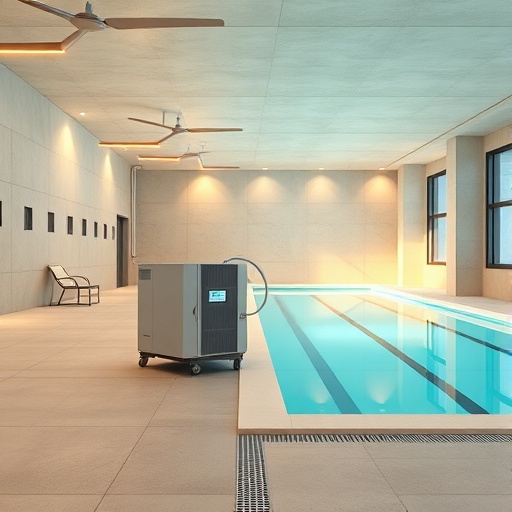
Heat pumps emerge as innovative heating solutions paired with dehumidifiers, recovering energy from exhaust air to warm indoor pools efficiently. These systems integrate seamlessly with swimming pool dehumidifiers, slashing heating costs while controlling humidity. Experts forecast widespread adoption in natatoriums, where heat pumps maintain relative humidity alongside toasty water temperatures. Dryers, or desiccant-enhanced units, complement this by regenerating using waste heat, amplifying energy saving. ASHRAE evolves standards to include these hybrids for optimal climate control. In commercial swimming pools, heat pump-dryer combos handle heavy loads without spiking bills. Future designs promise modular setups for easy retrofits in existing indoor pools. Technology advances allow heat pumps to modulate output based on CFM needs, ensuring balanced dehumidification. Pool operators eye these for sustainable upgrades, reducing reliance on fossil fuels. Innovative dryers incorporate solar-assisted regeneration, cutting operational expenses further. For heavy-duty applications, these solutions protect cement and equipment from thermal shocks. Trends point to smarter integration with water filters, creating holistic systems. Heat pumps and dryers redefine swimming pool dehumidification, blending comfort, efficiency, and eco-friendliness for tomorrow's facilities.
The Role of NexGen Technology in Pool Maintenance
NexGen technology reshapes pool maintenance by embedding AI-driven diagnostics into swimming pool dehumidifiers, predicting failures before they disrupt humidity control. These systems analyze data from sensors across the natatorium, optimizing CFM and relative humidity proactively. Experts view NexGen as a game-changer for indoor pools, integrating with heaters and water filters for unified oversight. ASHRAE incorporates NexGen principles to future-proof standards against evolving climates. In commercial settings, it enables predictive troubleshooting, minimizing downtime in high-traffic areas like YMCAs. Dehumidifiers for swimming pools under NexGen use machine learning to adapt to usage patterns, enhancing energy saving. This tech monitors cement integrity indirectly through moisture trends, alerting to potential erosion risks. Pool moisture removal becomes smarter with automated chemical dosing tied to dehumidification efficiency. Future maintenance shifts from reactive to preventive, extending equipment life significantly. NexGen platforms offer user-friendly dashboards for real-time insights, empowering operators. As adoption grows, it promises seamless climate control in diverse environments. The role of NexGen in pool maintenance underscores a shift toward intelligent, responsive dehumidification solutions that elevate operational excellence.
Sustainable Practices in Swimming Pool Dehumidification
Sustainable practices in swimming pool dehumidification prioritize low-GWP refrigerants and renewable energy integration to minimize environmental impact. Operators adopt desiccant dehumidifiers powered by solar panels, reducing carbon footprints in indoor pools. Experts advocate for water-efficient designs that recycle condensate from dehumidifiers for non-potable uses like irrigation. ASHRAE pushes green standards, encouraging relative humidity controls that align with energy-efficient building codes. In natatoriums, sustainable humidity control involves LED lighting and low-flow water filters to complement dehumidification efforts. Commercial swimming pool dehumidifiers now feature eco-modes that throttle CFM during low-demand periods, promoting energy saving. Trends include biodegradable desiccant materials, cutting waste in heavy-duty units. Pool dehumidifiers designed for recyclability extend the lifecycle of components like heaters. Sustainable troubleshooting incorporates audits to identify leaks early, preserving resources. Facilities embracing these practices, such as eco-conscious YMCAs, achieve certifications that attract green-minded users. Dehumidified air through sustainable lenses not only protects infrastructure but also stewards the planet. Future dehumidification leans into circular economies, where old units fuel innovations. This holistic approach ensures swimming pools thrive responsibly for generations.